
Filament types explained: which one for which job
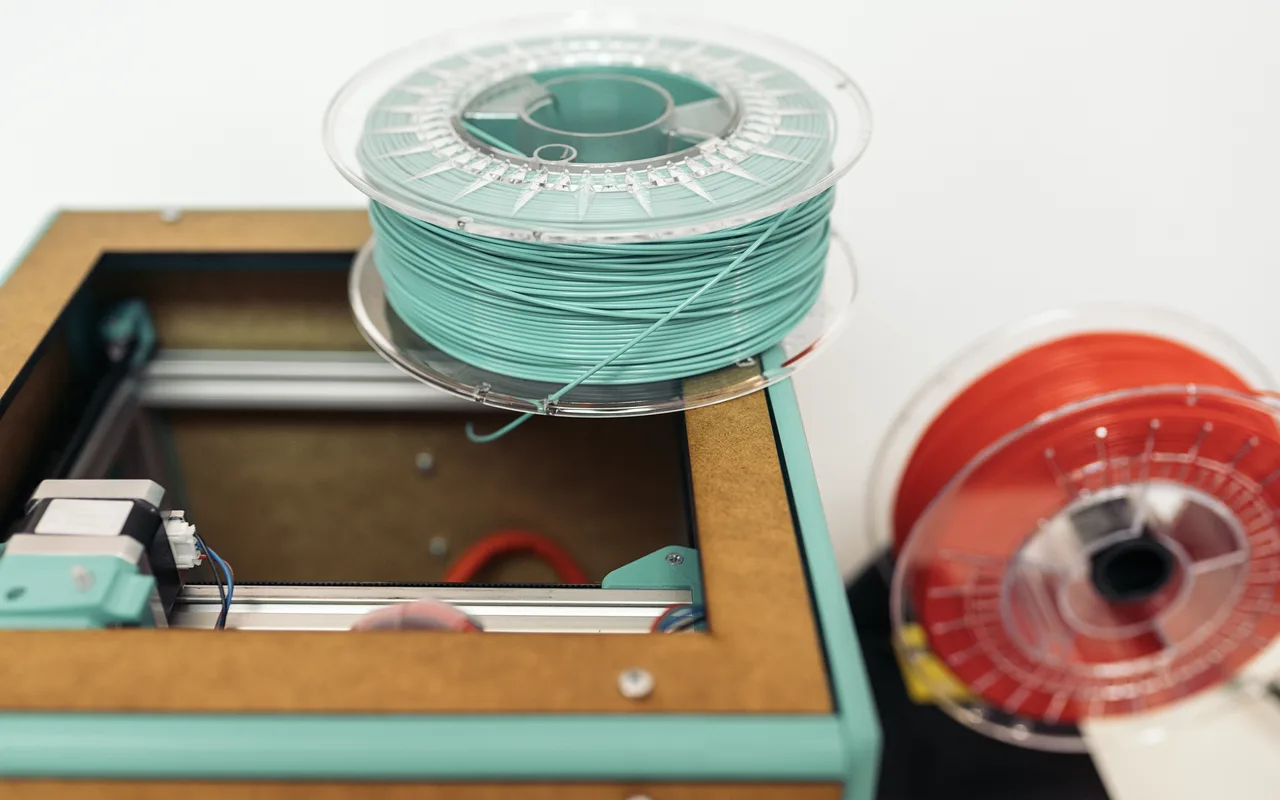
Filament choice decides more about how a print turns out than any setting in your slicer. Here is what each common material is actually for.
PLA, the default and for good reason
Made from plant starches, prints at roughly 190 to 220 degrees Celsius, needs little or no enclosure, and gives the sharpest detail and the widest colour range. It is stiff and slightly brittle, and it softens around 55 to 60 degrees Celsius, so it is an indoor material. Best for: toys, fidgets, signs, decor, display pieces.
PETG, the tough one
A cousin of drinks bottle plastic. Prints hotter, around 230 to 250 degrees, bends rather than snapping, handles heat and moisture better than PLA. It is stringier to print and harder to get perfectly clean, and it sticks to build plates aggressively. Best for: keychains, whistles, clips, anything that lives in a bag or outdoors.
ABS and ASA, for heat and weather
Both need an enclosure and good ventilation. They warp badly in a draught and give off a stronger smell while printing. ASA holds up to sunlight far better than ABS, which yellows and goes brittle outdoors. Best for: car parts, outdoor brackets, anything that must survive a hot car.
TPU, the flexible one
Rubbery, extremely tough, prints slowly and much more happily on a direct drive extruder. Best for: phone cases, bumpers, grips, anything that needs to squish.
Finishes, not materials
- Silk PLA has a metallic sheen and looks expensive. It is slightly weaker and hides layer lines well.
- Matte PLA hides layer lines even better and photographs beautifully, which is why it is popular for figurines.
- Gradient and dual colour spools shift colour along the print with no extra hardware.
- Glow in the dark and glitter filaments contain abrasive particles that chew through brass nozzles. Use a hardened nozzle.
- Wood, marble and metal filled are PLA with particles added. Lovely finish, more clogs, larger nozzle recommended.
Moisture is the hidden variable
Filament absorbs water from the air. Wet filament pops and crackles while printing, strings everywhere and prints weak, brittle parts. PETG, TPU and nylon are worst for it. Keep spools in a sealed box with desiccant, and dry them in a filament dryer or a low oven when prints start looking rough for no reason.
Does brand matter
Yes, more than people expect. Cheap filament varies in diameter along the spool, which changes how much plastic comes out and shows up as inconsistent walls and patchy colour. Good filament is more consistent spool to spool, which is why we pay for it rather than saving a few dollars per kilogram.
Quick answer table
- Detailed indoor print → PLA
- Dropped, carried, or left in the sun → PETG
- Hot car or outdoors long term → ASA
- Needs to flex → TPU
- Looks expensive on a shelf → silk or matte PLA